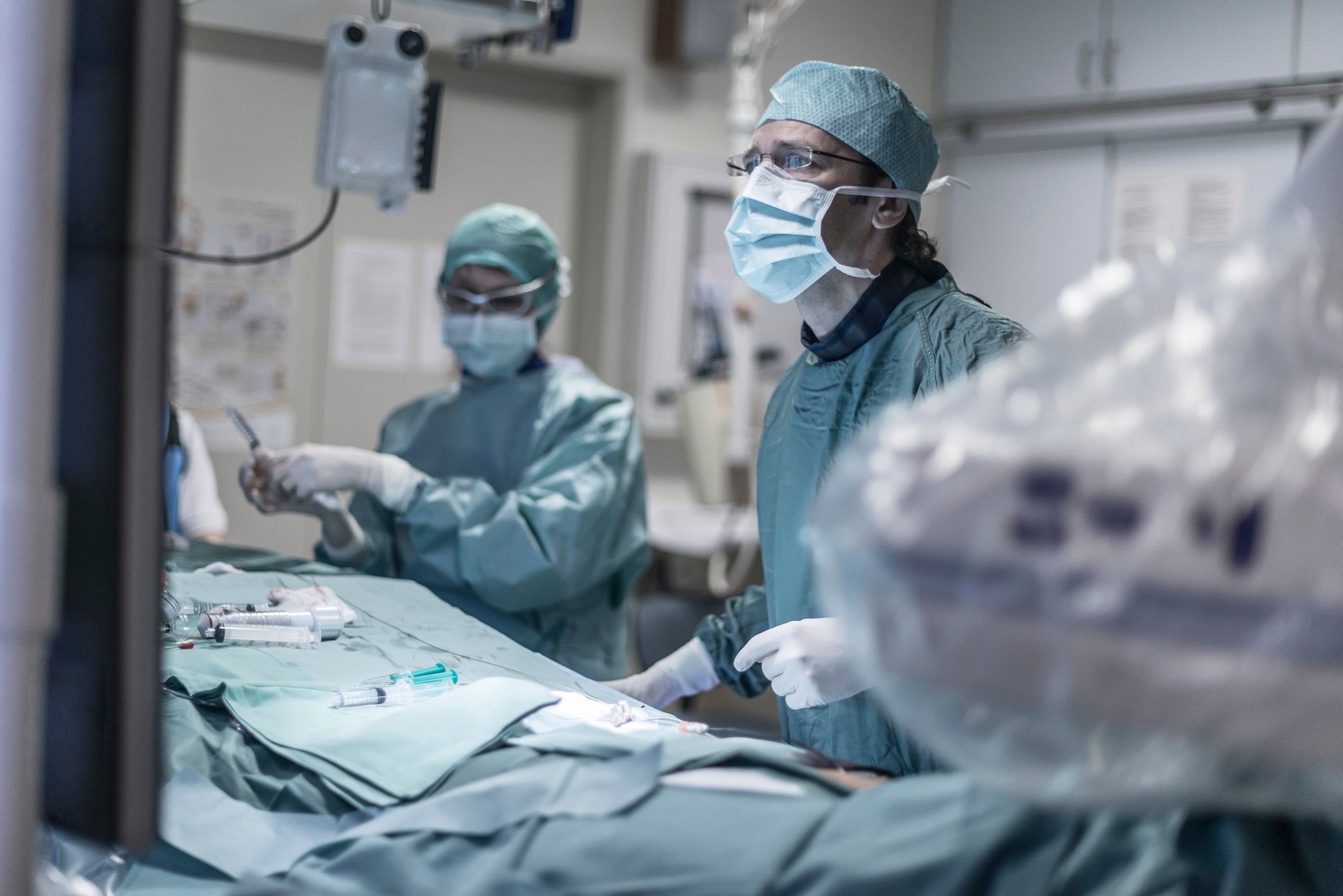
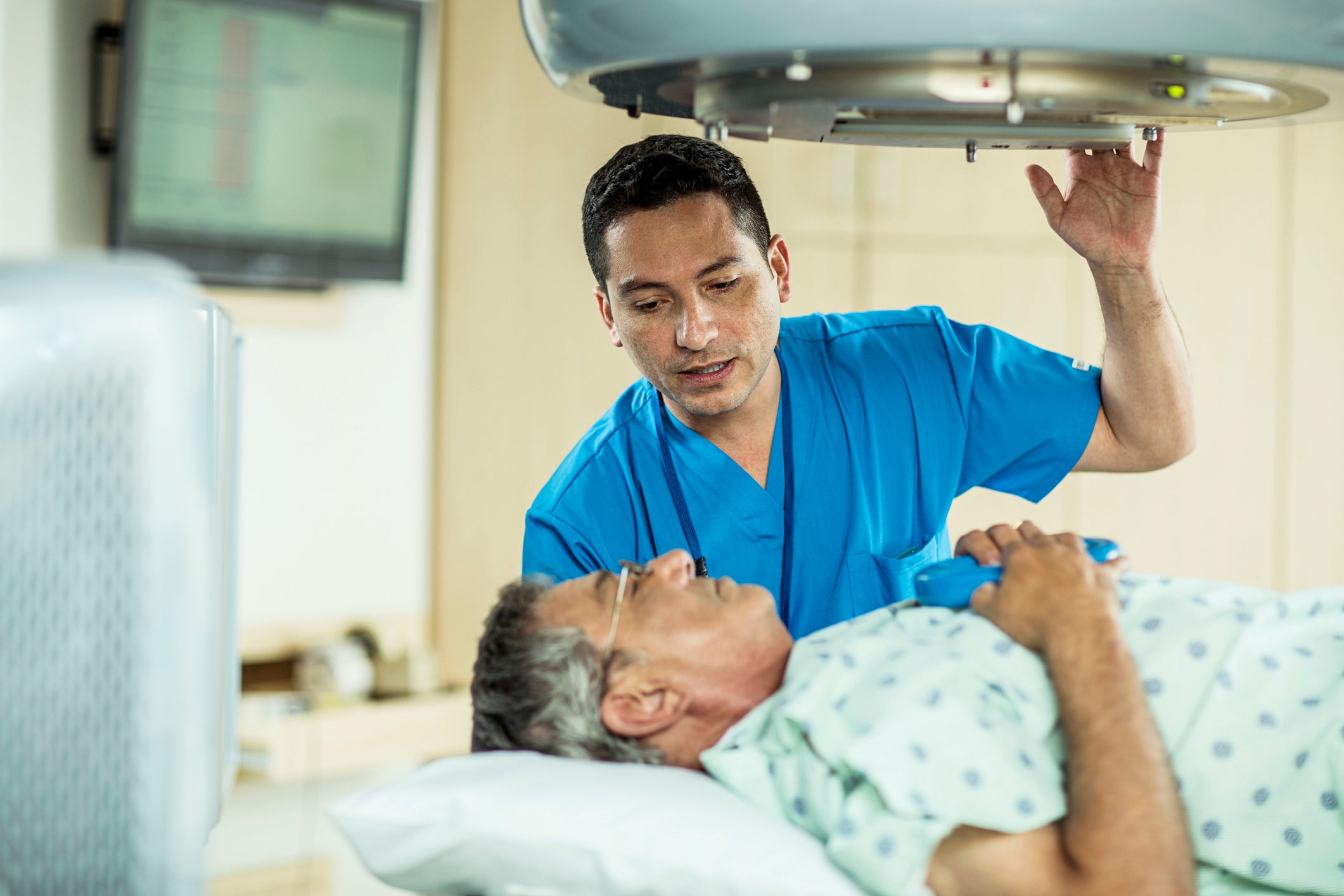
Interventional radiology is a subspecialty of radiology focusing on minimally invasive treatments guided by imaging techniques. These techniques include advanced technologies, such as ultrasound, CT scans, and MRI to diagnose and treat diseases across a variety of organ systems. Our team’s approach significantly reduces the physical impact on patients, allowing for treatments and screenings that are:
- Minimally invasive: Most procedures require only small incisions, reducing discomfort and risk of infection.
- Faster recovery: Patients can often return to daily activities within days.
- Safer alternatives: By avoiding large incisions and general anesthesia, IR offers a safer treatment option with fewer complications.
Your care starts with understanding your condition and finding the right approach for you. Our interventional radiology team offers a variety of tests and procedures designed to address your specific health needs, including:
- Angiography
- Angioplasty
- Biopsy Procedures
- Dialysis Catheter Placement
- Drainage Procedures
- Embolization
- Port Placement
- Stent Placement
- TIPS Procedure
- Thrombolysis
- Uterine Artery Embolization (UFE/UAE)
- Venous Ablation
- Vertebroplasty/Kyphoplasty
Interventional radiology uses minimally invasive image-guided procedures to diagnose and treat diseases in nearly every organ system, helping treat many conditions, including:
- Back pain: Minimally invasive procedures can stabilize spinal fractures and relieve pain, especially fractures caused by osteoporosis.
- Cancer: Image-guided treatments can target certain tumors, including liver and kidney cancers, while minimizing damage to surrounding healthy tissue.
- Deep vein thrombosis: Image-guided treatments can remove or dissolve blood clots in deep veins and help prevent serious complications, such as a pulmonary embolism.
- Liver disease: Interventional radiology can help manage complications of liver disease, including fluid buildup and increased pressure in the liver’s blood vessels.
- Uterine fibroids: Uterine artery embolization can treat painful or bothersome fibroids without major surgery.
- Vascular disease: Minimally invasive treatments can improve blood flow, open narrowed or blocked blood vessels, and provide vascular access for treatments such as chemotherapy and dialysis, that help with conditions like venous disease and peripheral artery disease (PAD)
- Wound healing: Treatments that improve blood flow and circulation can help chronic wounds heal.