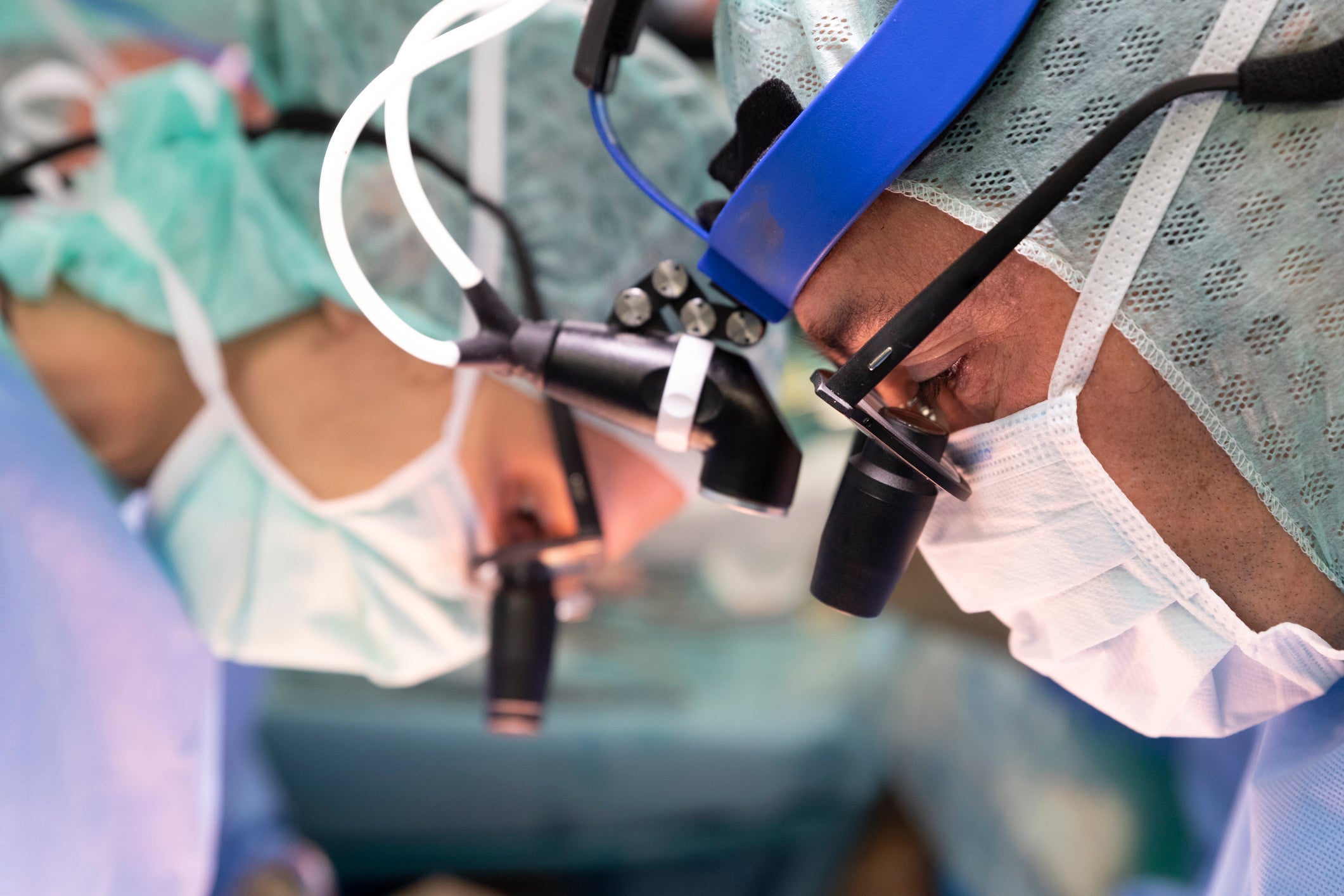
Finding out you need heart surgery can be a scary and stressful experience. At Saint Joseph Health System, we understand that you and your family deserve the best medical care available and also deserve compassionate, attentive emotional support.
What Is Cardiac Surgery?
Cardiac surgery is any procedure performed on the heart muscles, heart valves, or the blood vessels that connect to the heart. Cardiac surgery is performed by doctors with special training in managing heart conditions and repairing heart damage, including surrounding blood vessels. Some heart surgeries can be performed using minimally invasive techniques. In other cases, doctors need to do open heart surgery to offer the best possible outcome.
Cardiac surgery can be used to address a wide range of heart health conditions, including:
- Congenital heart defects
- Hole in the heart
- Heart murmur
- Endocarditis
- Heart attack
- Arrhythmia
- Structural heart disease
What to expect
Before you arrive at SJHS for cardiac surgery, your doctor will give you instructions for the days before your procedure. You may need to get bloodwork done several days before your surgery. In addition, you will likely need to refrain from eating for 8 to 12 hours before your procedure.
Once you are checked in, your doctor will talk to you and your family to go over the procedure and recovery information one last time. After that, you will be given general anesthesia so you are not conscious during surgery.
During the procedure, you may be placed on a heart-lung machine. This is a machine that takes over pumping your blood so your doctor can access your heart without interrupting blood flow to the rest of your body.
After surgery, you will be taken to a recovery room to wake up from anesthesia. Hospital staff will care for you as your wake up and to answer questions once you’re awake. You will then be admitted to a hospital room, where your doctor and the expert cardiac nursing staff will oversee your recovery. Most people stay in the hospital for several days after cardiac surgery.
Common cardiac surgery procedures
- Aortic aneurysm treatment
- Endocarditis treatment
- Balloon valvuloplasty
- Coronary artery bypass grafting (CABG)
- Coronary stent placement
- Valve treatment
- Transcatheter aortic valve replacement (TAVR)
- Valve-sparing aortic root replacement (VSARR)
Cardiac surgery is also used to place implantable medical devices that improve heart function, including:
- Left ventricular assist device (LVAD)
- Percutaneous ventricular assist device (VAD)